Leadership Skills Examples Every Resume Lists — Few Leaders Actually Have

Janelle Kwok
Leadership Training Consultant
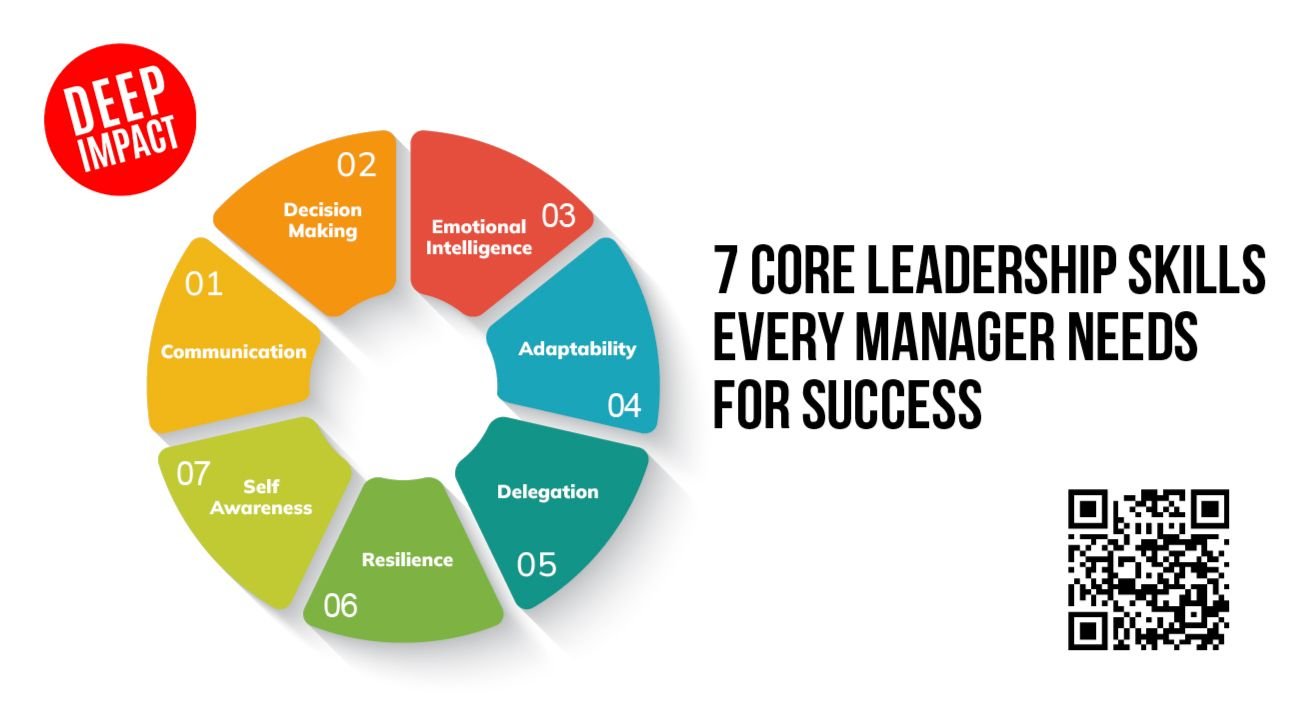
Scroll through almost any resume in a leadership track and you will find the same list repeated with minor variations: strong communication skills, strategic thinking, emotional intelligence, decision making, team building. These phrases have become so standard that they have stopped meaning much. They tell a hiring manager what a candidate hopes to be seen as, not what that person actually does when a team is under pressure, a project has stalled, or two employees are in open conflict. The gap between the leadership skills people list and the leadership style people demonstrate is exactly where most organisations run into trouble, and it is a gap that research from major consultancies and business schools keeps confirming rather than closing.
Key Takeaways
- Leadership skills listed on a resume only mean something when tied to a specific moment they were tested, not a general claim.
- Emotional intelligence, decision making, and communication reveal themselves under pressure, not when conditions are calm.
- Skills that sound similar, like communication and presentation, or strategic thinking and problem solving, are not the same capability.
- Self-reported strengths are inherently limited; evidence from outcomes and other people carries more weight than the label itself.
Why the Standard List Persists when adding leadership skill example

Part of the reason these phrases repeat so consistently across resumes is that they are genuinely the skills employers say they want. PwC’s research on leadership skills in demand across Europe and the Gulf region found that leadership itself is treated as the top soft skill priority by more than half of respondents, with vision and strategic thinking expected to rise sharply in importance over the following two years, 56 per cent of respondents naming leadership as a priority and 54 per cent expecting vision and strategic thinking to be in highest demand over the next two to three years, up from 43 per cent currently. That demand explains why job descriptions and resumes converge on the same vocabulary. What it does not explain is why so many organisations report a persistent shortfall in exactly these areas even as demand for them grows.
The honest explanation is that these skills are hard to demonstrate and easy to claim. Writing “strong communication skills” on a resume costs nothing. Actually delivering difficult feedback in a way an employee can hear and act on, staying consistent when the message is unpopular, and following up to confirm the message landed as intended, requires sustained practice under conditions most candidates never have to prove in an interview. The list survives because it is aspirational shorthand, not because it is diagnostic.
Emotional Intelligence: The Most Claimed, Least Defined Effective Leadership Skill
Emotional intelligence tops almost every leadership skills list, yet it is rarely explained beyond a vague notion of being good with people. In practice, it shows up as a leader’s ability to read tension in a room before it becomes a formal complaint, or to notice when a normally reliable team member has gone quiet and follow up privately rather than publicly.
Research into the emotional and social skills new leaders need found that managers who act in emotionally intelligent ways create a more positive work climate and help employees grow into their roles more effectively, with supervisors who behave this way fostering a more positive work climate, employees who are able to grow in their jobs, and greater overall effectiveness.
The same research pointed to a practical mechanism behind this: leaders who are skilled at managing interpersonal interactions build an environment that supports employee engagement and well being while also strengthening team cohesion around shared objectives.
What makes emotional intelligence difficult to fake on a resume is that it only becomes visible under pressure. Anyone can be pleasant when a project is on schedule and a team is well resourced. The skill is tested when a deadline slips, when a client is unhappy, or when a high performer starts underperforming for reasons that are not yet clear.
A good leader who can only manage relationships when conditions are calm is not demonstrating emotional intelligence as a leadership skill; they are demonstrating basic professional courtesy, which is a different and much lower bar.
Active listening gets listed constantly alongside emotional intelligence, but few leaders can point to a specific moment where listening changed a decision they were about to make.
Most use the phrase to mean “I let people finish their sentences,” which understates a skill need that is supposed to surface real problems early and build the kind of trust that makes employees willing to raise bad news before it becomes a crisis. Genuine active listening changes outcomes. It means a leader who was leaning towards one decision hears something in a conversation that shifts their thinking, and can point to that moment afterwards.
Decision Making for Success Under Genuine Uncertainty
Decision making suffers from the same flattening that emotional intelligence does. Everyone claims it as a strength, yet the skill is not really about making decisions quickly or confidently. It is about making decisions under incomplete information, owning the outcome if it goes wrong, and explaining the reasoning clearly enough that the team understands the logic even if they disagree with the call.
Reporting on how CEOs actually balance data and instinct, drawn from KPMG’s global survey, found substantial variation in how much leaders rely on data versus instinct, with a large majority of surveyed executives in some regions acknowledging they had relied on perception rather than data when making a significant business decision.
That variation is not necessarily a weakness. It reflects the reality that most consequential decisions have to be made before the data is complete, and the leadership skill lies in knowing when to wait for more information and when waiting itself becomes the more costly choice.
A leader who can only make good decisions when all the data is in is not demonstrating decision making as a leadership skill; they are demonstrating comfort with certainty, which is a different thing entirely. The resumes that list “strong decision maker” almost never distinguish between the two challenges.
A more revealing question, whether in an interview or a performance review, is to ask for a specific decision that had to be made with information the leader knew was incomplete, and what they did afterwards when new information came in that complicated the original call. Leaders who can answer that question with a real example are demonstrating the skill. Leaders who can only describe decisions that turned out to be obviously correct in hindsight are usually describing luck.
Communication Skill Leadership beyond Keynote
Communication skills face perhaps the widest gap between claim and reality. Being articulate in a meeting is not the same as being able to deliver difficult feedback in a way an employee can actually hear and act on. Strong communication as a leadership skill means adjusting the message for the audience, staying consistent when the news is unpopular, and following up to check the message landed the way it was intended.
Recent research on why leaders need power skills such as communication and trust building points to practical methods leaders can use to close this gap, including structured listening tours where leaders meet employees where the work actually happens rather than relying on formal reporting lines to surface problems.
Leaders who are excellent communicators in a keynote setting sometimes struggle in this quieter, more repetitive form of communication, which is where most of a team’s day-to-day trust is actually built or lost.
A speaker who can hold a room of five hundred people rapt for forty minutes has demonstrated presentation skill, which is valuable and worth listing on a resume honestly. It is not the same skill as sitting across from one employee and explaining why a promotion did not happen this cycle in a way that leaves the employee’s motivation intact rather than damaged.
Conflating the two is one of the most common ways leadership resumes overstate communication as a unified skill when it is really several distinct skills that do not always travel together.
Strategic Thinking Versus Problem Solving for Effective Leader
Strategic thinking and problem solving get grouped together often enough that they start to blur on resumes and in job descriptions, but they involve different muscles. Strategic thinking is about seeing how a decision today affects the organisation’s position in a year or more.
Problem solving is closer to the ground: untangling a specific breakdown between departments, or working out why a project keeps missing deadlines when everyone involved is individually capable. A leader can be strong in one and genuinely weak in the other, and resumes rarely make that distinction, which means the skill listed does not tell you much about what the person will actually be good at solving.
This distinction matters more than it might first appear because organisations often hire for one when they actually need the other. A company bringing in a new leader to fix a specific operational breakdown, such as a persistent bottleneck between sales and delivery, needs someone strong in problem solving more than someone strong in long-range strategic thinking. A company preparing to enter a new market needs the opposite emphasis. When both skills are compressed into the same resume line, the hiring decision loses the information it actually needs.
Conflict Management Is Not Relationship Building is Leader Able
Conflict management and relationship building are two more skills that sound similar on paper and diverge sharply in practice. Plenty of leaders are skilled at building relationships when things are calm, but conflict management asks something harder: staying engaged with a disagreement long enough to resolve it, rather than smoothing it over to restore comfort. Teams tend to know the difference. They can tell whether a leader actually addresses friction between team members or simply waits for it to become someone else’s problem.
Research on developing human-centred leaders found that the share of overall leadership effectiveness attributable to a leader’s ability to read a situation and respond with the right combination of behaviours has grown substantially over the past several decades, rising from roughly a third of effectiveness in the late 1990s to well over half more recently.
That shift matters directly for conflict management, because it means a leader’s fixed relationship-building style, however warm and genuine, is no longer sufficient on its own.
The leaders who handle conflict well are the ones who can shift their approach depending on whether the conflict is between two peers, between a manager and a direct report, or between departments with genuinely competing incentives. A single relationship-building style applied uniformly to all three situations tends to under-serve at least one of them.
Self Awareness as the Skill Underneath the Others
Self awareness rarely tops resume lists the way communication or strategic thinking does, but it is arguably the precondition for most of the other skills to function honestly. A leader who overestimates their own communication ability will not notice when a message has landed badly.
A leader who overestimates their own emotional intelligence will not notice when they have missed the signs of a disengaged employee. The 2024 Global Leadership Development Study documented how the pressure on leaders to master an ever-widening set of capabilities, from emotional intelligence to digital fluency, has intensified to the point where leadership is increasingly described as a specialised profession rather than an extension of technical expertise, with 70 per cent of respondents saying this breadth of capability is important or very important.
This is part of why self-reported skills on a resume are structurally limited as evidence. The person filling out the resume is, almost by definition, the person least positioned to notice their own blind spots. This does not mean self-assessment is worthless, but it means the most useful leadership resumes and interview answers are the ones that include evidence from other people, not just the candidate’s own account of their strengths.
What Actually Distinguishes Leaders Who Have These Skills

None of this means the standard list of leadership skills is wrong. Emotional intelligence, time management, critical thinking, decision making, communication, strategic thinking, conflict management, and self awareness are genuinely the skills that separate leaders who build durable teams from those who simply hold a title.
The issue is that resumes and job descriptions have turned these into checkboxes rather than demonstrated behaviours. A more useful approach, whether evaluating a candidate or developing one’s own leadership skills, is to ask for the specific moment each skill was tested. Not “are you a good communicator,” but “tell me about a time you had to deliver feedback an employee did not want to hear, and what happened after.”
Not “how do you build trust with your team,” but “describe a decision you made that your team disagreed with, and how you handled that disagreement.”
This shift in framing also matters for how organisations design leadership development programmes rather than just how they hire. Research on how leadership programmes are framed found that the way a programme is described changes how willing employees are to take part in it, with programmes described as teaching specific skills drawing more interest than programmes framed around the broader and less concrete goal of becoming a leader.
That finding has a direct implication for the resume problem discussed throughout this piece. If specific, demonstrable skills are more motivating to develop than abstract leadership identity, they are also likely to be more honestly represented once developed, because a candidate who has genuinely practised delivering difficult feedback has a concrete story to tell about it, while a candidate who has only absorbed the idea that leaders should be good communicators has nothing but the label.
A Note on Frontline and First-Time Leaders
The gap between listed and demonstrated skill is often widest at the point someone first becomes a manager. New leaders frequently master the mechanics of the role quickly, such as time and attendance tracking, performance reviews, and administrative paperwork, while the human-centred skills and strategy that actually determine whether their team thrives take considerably longer to develop.
This is particularly pronounced for first-time managers leading customer-facing or frontline teams, who face different pressures than managers of knowledge workers, including lower-paid roles, longer hours, and more emotionally charged interactions with customers.
Leaders in these environments who fail to develop genuine emotional intelligence do not just underperform on an abstract leadership scale; they contribute directly to the burnout and turnover their frontline employees experience, which is one of the more concrete and measurable costs of the skills-claimed-versus-skills-demonstrated gap.
Rewriting the Resume Line, Not Just the Skill for a Workplace
For anyone actually revising a leadership resume or a set of interview talking points based on this argument, the practical takeaway is not to abandon the standard vocabulary. Hiring managers still search for and expect to see terms like leadership skills, decision making, emotional intelligence, and strategic thinking, and stripping them out entirely would make a resume harder to find and harder to benchmark against other candidates.
The more effective move is to pair each claimed skill with a single line of specific evidence immediately beneath it, rather than leaving the skill to stand alone as an assertion. A line that reads “led cross-functional team through a six month product delay, communicating revised timelines to stakeholders weekly while keeping team morale intact” does more work than “strong communication and leadership skills” ever could, while still containing the keywords a hiring manager or applicant tracking system is likely to search for.
The same principle applies to how leaders talk about themselves in performance reviews, promotion cases, and speaker biographies. The leaders worth hiring, promoting, or booking as consultants are rarely the ones with the longest list of leadership skills on their resume.
They are the ones who can describe, in specific and sometimes uncomfortable detail, exactly how those skills showed up when it actually mattered, including the times the outcome was not clean, the feedback was not well received at first, or the strategic call took longer to prove right than anyone was comfortable with. That level of specificity is harder to produce and harder to fake, which is precisely why it is worth more than another line on a list every resume in the leadership track already has.
If your organisation is looking to move leadership development beyond the checklist and into something your people can actually point to and prove, get in touch with Deep Impact to talk through what that could look like for your team.
Frequently Asked Questions
What are the most commonly listed leadership skills on resumes?
The most frequently listed skills are emotional intelligence, communication, decision making, strategic thinking, conflict management, team building, and self awareness. These appear consistently because they are also the skills employers say they prioritise most, but their frequency on a resume says little about whether the candidate can actually demonstrate them.
Why is there such a large gap between listed leadership skills and demonstrated leadership skills?
These skills are inexpensive to claim and expensive to prove. Genuine emotional intelligence, sound decision making under uncertainty, and effective conflict management only reveal themselves under real pressure, such as a missed deadline, a difficult conversation, or a disagreement that will not resolve on its own. A resume line cannot capture that context, so it tends to default to the label rather than the evidence.
How can a leader prove a skill rather than just claim it?
The most reliable method is to attach one specific, evidenced example to each claimed skill, describing a real situation, the action taken, and the outcome, including outcomes that were not entirely clean. A single sentence such as describing how a difficult decision was made with incomplete information, and what happened when new information complicated it afterwards, demonstrates far more than the skill label alone.
Is emotional intelligence the same as being likeable or easy to work with?
No. Being pleasant during calm periods is basic professional courtesy. Emotional intelligence as a leadership skill is tested specifically when conditions are difficult, such as noticing a disengaged employee before it becomes a performance issue, or managing a team through a stressful deadline without damaging morale.
Why do strategic thinking and problem solving get confused so often?
Both involve analysis and judgement, which makes them easy to group together on a resume, but they operate at different altitudes. Strategic thinking concerns the organisation’s position over the longer term, while problem solving addresses specific, immediate breakdowns. A leader can be genuinely strong in one and weak in the other, and organisations that fail to distinguish between them risk hiring the wrong strength for the actual problem in front of them.
Can leadership skills like these actually be developed, or are they mostly innate?
They can be developed, and research on how leadership programmes are framed suggests people are more motivated to build specific, named skills than to pursue the vaguer goal of becoming a leader. Structured coaching, facilitation, and practice under real conditions are what typically closes the gap between a claimed skill and a demonstrated one.
Read more: How to Lead a Team Well Without Burning Out