Emotional Intelligence: The Leadership Edge AI Can’t Replace

Janelle Kwok
Leadership Training Consultant
Organisations have spent heavily on AI tools, dashboards and copilots, yet many leadership teams are meeting the same awkward truth: adoption is slow, trust is thin, and people still do not fully understand what the change means for their work. Most companies now have an AI policy, an AI taskforce, and at least one meeting about why nobody is using the tool properly. The problem is rarely information. It is trust, and trust is built or broken by emotional intelligence leadership, not by better dashboards.
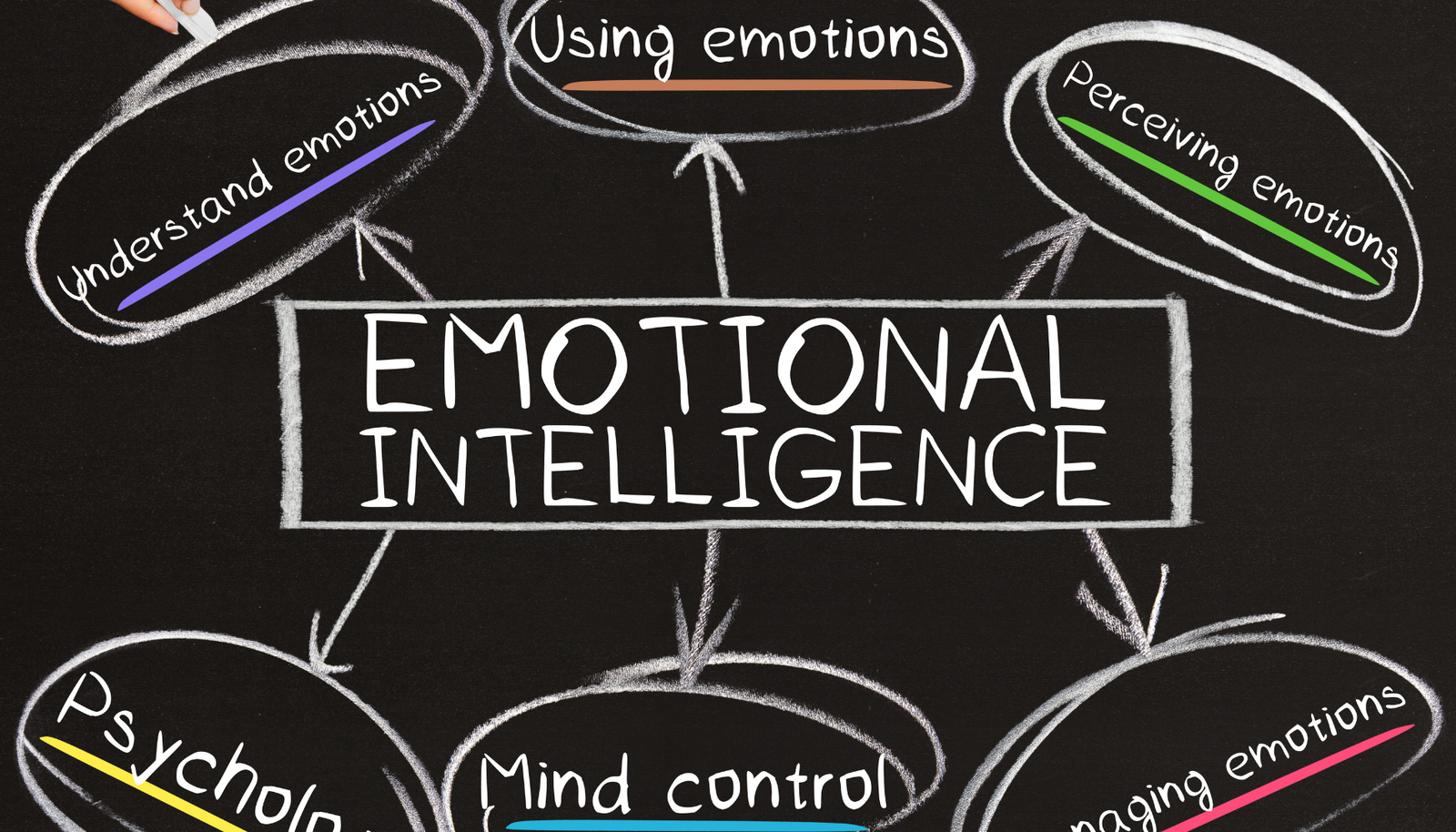
Emotional intelligence, in practice, is the ability to recognise emotion in oneself and others, manage emotion under pressure, and make decisions people can understand well enough to carry out. In an AI workplace, this is not a soft extra. It is a business capability, and it is fast becoming the leadership skill that separates high performing teams from the rest.
This article explores what AI cannot replace, how emotionally intelligent leaders use technology without becoming distant, and the practical actions leaders can take over the next 30 days to strengthen everyday leadership behaviour.
Key Takeaways
- Emotional intelligence leadership is not warmth alone; it makes human consequences visible in business decisions.
- As AI improves, the cost of poor judgement, weak communication and slow trust repair rises.
- A useful question this week: what emotional response is the AI plan creating, and has it been accounted for?
- When leaders create a safe environment to learn, adoption tends to improve because each team member feels safer to speak.
- Training helps, but without reinforcement, management routines and follow-through, behaviour usually slips back.
What Emotional Intelligence Looks Like in an AI-Powered Workplace

Emotional intelligence shows up in observable decisions, not just in likeability. Drawing on the four domains popularised by psychologist Daniel Goleman, an intelligence leadership model for senior leaders rests on self-awareness (recognising one’s own emotional state and its effect on others), self-regulation or self-management (staying composed and deliberate under pressure), social awareness (reading the emotional and cultural context of a team), and relationship management (handling conflict, feedback and influence well). A technically correct decision delivered without care for any of these four can still damage trust, performance and motivation.
“The future of leadership will not be defined by who uses AI best, but by who remains most human while using it.”
-Kenneth Kwan, CSP
Charisma and confidence are not the same as emotional intelligence. A more reliable test is behavioural: can the leader receive feedback, admit uncertainty, listen well, resolve conflict fairly, and stay present when things get difficult? Deloitte’s January 2026 study of high-performing teams, “Human capabilities are at the heart of high-performing teams,” surveyed nearly 1,400 employees and found that emotional and social intelligence was the top factor teams cited for their own success members of high-performing teams were 2.3 times as likely to feel trusted by their leader and 2.3 times as likely to feel respected by peers. Technical skill alone did not explain the gap; the human skills did.
Cultural intelligence strengthens emotional intelligence in regional teams. Emotional intelligence becomes even more important when teams span different cultures, languages and working styles. A leader who communicates effectively in one country may be misunderstood in another if local expectations around feedback, hierarchy or decision making are overlooked. Cultural intelligence helps an emotionally intelligent leader recognise these differences, adapt their approach and build trust without compromising standards. Together, emotional and cultural intelligence create stronger relationships, better collaboration and a stronger workplace culture.
The automation announcement reveals the difference quickly. A strong message does more than explain the business case. It names uncertainty, sets out what leaders know, and shows how fairness will be handled. Both versions may contain the same facts. Only one is likely to build trust.
Why Emotional Intelligence Becomes More Valuable as AI Improves
Better analysis increases the cost of poor judgement. AI can speed analysis, but it cannot own the human impact of a decision. Under pressure, stress narrows attention, which is exactly why self-management matters: leaders still need to ask what is true, who carries the risk, and what response protects trust.
AI adoption is an emotional transition, not just a software rollout. Some employee groups fear redundancy. Some managers feel their technical skill is being downgraded. Others are curious but overloaded. If communication speaks only to capability and ignores emotion, adoption slows because the real barrier has not been addressed.
Trust is the real infrastructure behind adoption. People need psychological permission to ask basic questions, report mistakes and learn in public without shame. Adoption tends to improve when leaders foster learning rather than treat hesitation as defiance. A lack of emotional intelligence becomes expensive during change, and a lack of emotional awareness at the top tends to cascade quickly through a whole team.
This shift is now well documented outside the leadership development industry itself. PwC’s 2026 Global AI Jobs Barometer, based on an analysis of more than one billion job advertisements across six continents, found that as AI automates routine tasks, uniquely human capabilities such as judgement, creativity and leadership are becoming more valuable and better rewarded across the global labour market (PwC).
“AI can improve the quality of information. Emotional intelligence determines the quality of leadership.”
-Kenneth Kwan, CSP
AI increases leadership responsibility rather than reducing it. The more AI handles analysis, the more clearly leadership is revealed in what humans still own: ethics, meaning, conflict resolution and consequences. Faster output does not remove accountability. It sharpens it.
The Five Human Leadership Moments AI Cannot Own
Decisions where every option carries human consequences. Data can clarify trade-offs. It cannot bear the moral weight of restructuring, succession or redeployment. An intelligent leader still has to explain the choice, examine alternatives and take responsibility face to face.
Difficult conversations still require human accountability. AI can organise facts and suggest questions. It should not replace the actual conversation. When a manager must resolve conflict, tone, presence and judgement matter as much as structure. Good preparation helps; courage still does the work.
Teams often reveal resistance through silence, not argument. In hierarchical settings, delayed resistance can look like agreement until execution stalls. Private follow-up matters because concerns about status, workload or risk often emerge one-to-one rather than in a public room, and a single quiet team member can signal a wider problem.
Trust repair after a leadership mistake depends on action, not wording. An apology may be necessary, but it is rarely enough. Leaders need to acknowledge impact, correct behaviour and follow through consistently. AI can draft the message; only people can restore belief over time.
Uncertain futures still require leaders to provide meaning. Teams do not need false certainty. They need orientation: what is known, what is not yet known, what happens next, and when the next update will come. That is a core component of stable leadership communication.
How Emotionally Intelligent Leaders Use AI Without Becoming Less Human
Executive teams are best served by separating recommendation from responsibility. AI can analyse patterns; leaders must weigh ethics, influence stakeholders and sign off on consequences affecting jobs, pay and career progression.
| Activity | What AI can support | What leaders must own |
| Analysis | Trend spotting | Business judgement |
| Scenario planning | Option generation | Trade-offs and fairness |
| Feedback review | Theme clustering | Minority voice protection |
| Conflict repair | Drafting language | Real relationship repair |
AI can help L&D teams cluster survey themes and identify repeated concerns at scale. It can also flatten nuance. Validation still matters through interviews, manager conversations and clear privacy standards, human review remains essential.
People managers should use AI before and after conversations, not instead of them. Before a difficult conversation, AI can help develop questions and highlight blind spots. Afterward, it can help summarise actions. During the exchange itself, attention belongs on the other person; reading from a script usually weakens trust.
Efficiency is not the same as leadership effectiveness. Time saved matters, but so do adoption, confidence, issue quality and retention. A faster message that nobody believes is not progress. It is simply quicker disappointment. Neutral practices can strengthen EQ without dependence on tools: short reflection logs, peer feedback, stakeholder listening maps and post-meeting reviews can enhance self-awareness without fanfare. These routines enable a leader to notice patterns earlier and respond more effectively.
A Practical Emotional Intelligence Leadership System for the Next 30 Days
The point is not to transform culture in a month. It is to create visible movement through small, deliberate practice the same “small steps to big changes” logic that underpins most durable leadership development.
| Week | Focus | Success indicator |
| First Week | Notice triggers | Better self-awareness in meetings |
| Second Week | Practise the pause | Fewer reactive replies |
| Third Week | Map stakeholder emotion | More targeted communication |
| Forth Week | Turn insight into routine | More consistent follow-through |
Week one: identify what changes your behaviour under pressure. Ask two trusted colleagues when your tone shifts under strain. Many leaders are self-aware in calm conditions and less aware when stakes rise. That gap is often where credibility starts to slip.
Week two: practise the gap between signal and response. Before answering a sensitive email or challenge, pause. Ask: what am I feeling, what does the team need, and what outcome matters most? This simple practice can improve judgement quickly.
Week three: map emotions, not just stakeholders. Segment groups by confidence, overload, fear or curiosity. One-size-fits-all messaging may feel efficient, but it rarely lands well across a mixed business environment.
Week four: turn EQ into operating routines. Add behavioural indicators to reviews and check-ins: listening quality, trust repair and conflict handling. If organisations reward speed alone, old habits return by Monday.
How Organisations Make Emotional Intelligence a Competitive Advantage

Executive teams should connect emotional intelligence leadership to execution, retention, succession and culture. A real leadership skill needs observable standards, not vague statements about being more positive.
Learning tends to stick when it is tied to actual pressure points: change announcements, customer escalations, delayed delivery and cross functional conflict, rather than generic theory delivered away from real work.
Signals worth tracking include speaking up rates, escalation speed, meeting participation and regrettable turnover. No single factor explains every outcome, but these indicators often help organisations recognise where leadership behaviour is helping or hurting business performance.
TalentSmartEQ’s 2026 State of EQ Report, drawing on data from more than 23,000 individuals and nearly 700 leadership, HR and L&D professionals, found that emotional intelligence sits alongside adaptability and critical thinking as one of the strongest predictors of organisational performance in an AI-drivenworkplace.
Meeting planners and L&D leaders alike want evidence that learning will transfer back to work, which is why leadership experiences built around real decisions tend to outperform generic workshops. Organisations across Singapore and Asia have worked with Deep Impact to strengthen communication, trust and team performance. If this is a current priority for your organisation, learn more about Deep Impact Online’s Senior Leadership Training programme.
Conclusion
AI will continue to change how work gets done. It will make organisations faster, automate routine tasks and provide insights that were once impossible to generate at scale. None of that changes the responsibility of leadership.
People will still look to their leaders for clarity during uncertainty, empathy during difficult moments and sound judgement when the right answer is not obvious. They will remember how decisions were communicated, whether their concerns were heard and whether trust was strengthened or weakened along the way.
Emotional intelligence is not a capability competing with AI. It is the capability that ensures AI is used wisely. Technology may support better decisions, but only leaders can create the trust, confidence and shared purpose that turn those decisions into meaningful action.
If your organisation is investing in AI, invest just as intentionally in the leaders guiding that change. Connect with Deep Impact to explore practical leadership development, executive coaching and keynote programmes that help leaders build trust, lead change and bring out the best in their people in an AI powered workplace.
Frequently Asked Questions
What is emotional intelligence leadership?
Emotional intelligence leadership is the ability to recognise one’s own emotion, understand how others feel, and manage relationships well under pressure. It combines self-awareness, empathy, self-regulation and relationship management with practical business judgement.
Why is emotional intelligence important when leaders already use AI?
AI can provide speed, analysis and options. Leaders still need to understand context, make ethical calls, communicate hard news and maintain trust. In short, AI can support thinking, but it cannot replace emotionally intelligent leadership.
Can AI measure a leader’s emotional intelligence?
Partly. AI can help identify patterns in feedback, behaviour and communication, but it cannot fully capture nuance, privacy risk or context. A balanced view combines data, observation and evidence from real workplace situations.
Read more: Leadership That Stays Human in the Age of AI