1-On-1 & Small-group Leadership Coaching
Corporate Coaching
In Singapore
Accelerate leadership capability. Coach the person, not the curriculum.
Corporate coaching is how we develop leaders through the specific situation in front of them - a new role, a stalled team, a strategic inflection, a board exposure. We design every engagement around the leader's real context, partner across 3, 6, or 12 months, and measure the shift against the outcomes that mattered to the business at the start.
1-on-1
Bespoke
3–12 mo
Engagements
Confidential
Every session
Engagement Snapshot
Format
1-on-1 · Small group · Team
Duration
3, 6, or 12-month engagements
Cadence
2–4 week sessions, 60–90 min
Delivery
In-person Singapore · Virtual
Confidentiality
Coach–coachee confidential by default
Methodology
Solution-focused · ICF-aligned · Stakeholder-centred coaching options
Trusted By Leading Organisations











Why Leaders Coach With Us
19 years of coaching leaders through Asia's most demanding transitions.
Our coaches work with executives and managers at the moments that matter - post-promotion, mid-restructure, pre-board, stuck-in-the-middle. We bring 19+ years of leadership development work with 285+ organisations across 40+ countries. Every coaching engagement is measured against the outcomes that mattered to the sponsor at the start.
19+
Years Coaching Asian Leaders
Since 2007 - coaching embedded alongside every DI leadership training engagement.
285
Client Organisations Served
From regional banks and listed conglomerates to fast-scaling growth companies.
40+
Countries Represented
Asia-Pacific coaching experience with cross-border and expat leadership contexts.
How Our Coaching Works
Five-step Corporate Coaching Engagement
Every corporate coaching engagement is shaped around the leader's context, role expectations, and desired outcomes. While the coaching content is bespoke, the process remains disciplined — helping coaching conversations translate into clearer leadership shifts and practical application over time.
01
Fit-call & scoping
A confidential 30-minute conversation with the prospective coach. We clarify the situation, the desired shift, and whether the chemistry is right. No commitment, no charge.
02
Three-way contracting
A joint session with the coach, coachee, and sponsor (usually HR or the line manager). We agree the coaching outcomes, what "good" looks like, confidentiality boundaries, and how we will know it is working.
03
Coaching sessions
Structured 60–90 minute sessions every 2–4 weeks. Each session focuses on a live leadership situation the coachee is navigating - not abstract theory. Between sessions, the coachee experiments in the real work.
04
Mid-point review
At the mid-point of the engagement, we revisit the three-way contract. What has shifted? What still needs focus? Are we on the right track, or does the coaching contract need a re-steer?
05
Outcome summary & transition
At the close of the engagement we summarise the shift against the original outcomes and agree a handover - self-directed, manager-supported, or extended with a lighter cadence. Coaching is temporary scaffolding, not a permanent dependency.
Engagement Types
Executive coaching, leadership coaching, and team coaching - three distinct formats for three distinct problems.
Corporate coaching is not a single product. The coaching that suits a newly-appointed C-suite executive is not the coaching that suits a cohort of high-potential managers, and neither is the coaching that suits an intact leadership team. Pick the right format first, then design the engagement.
Often Paired With
Leadership coaching frequently sits alongside a cohort program. Our clients most often pair coaching with Leaders as Coach (coaching-capability development for leaders who then apply it with their own teams) and Small Steps to Big Changes (solution-focused leadership habit building). Coaching becomes the accountability mechanism that drives application between training modules.
Type 01
Executive Coaching
C-suite, VPs, and senior leaders in Singapore and across Asia.
One-to-one executive coaching for senior leaders carrying complex strategic, stakeholder, and organisational responsibilities. Depending on the leader's context, the engagement may use a solution-focused approach, Marshall Goldsmith Stakeholder Centered Coaching, or a blended coaching design.
How It Runs
- check Confidential 1-on-1 format, 60–90 minute sessions
- check Typical engagement: 6 or 12 months with 2–4 week cadence
- check Works with sensitive, undiscussable, and high-stakes content
- check Stakeholder feedback may be integrated where appropriate and agreed with the sponsor and coachee, especially relevant for Marshall Goldsmith Stakeholder Centered Coaching or blended engagements
- check Executive presence, influence, and strategic communication themes common
When It Fits
Typical fit: a newly-appointed MD preparing for their first board cycle, a regional P&L leader stepping up to a global role, a technical executive moving into a people-heavy commercial role.
Type 02
Leadership Coaching
Mid-level leaders, directors, and high-potentials moving into senior roles.
One-to-one or small-group coaching for managers and directors who are building leadership capability - often as part of a named succession plan or a stretch assignment. Leadership coaching tends to focus on the practical: coaching the team, managing upward influence, delivering through others, and moving from doing to orchestrating.
How It Runs
- check 1-on-1 or small cohort (3–6 leaders on shared development arc)
- check Typical engagement: 3 or 6 months, paired with leadership training
- check Common focus: coaching skills, delegation, influencing, tough conversations
- check Often paired with the Leaders as Coach or Small Steps programs
- check Outcomes framed as visible behaviour change in the leader's day-to-day
When It Fits
Typical fit: a high-potential director moving into the leadership team, a group of first-time people managers who have just completed manager training, or a cohort of functional leads preparing for cross-functional promotion.
Type 03
Team Coaching
Intact leadership teams - exco, functional leadership teams, regional teams.
Coaching is applied to the team as a single unit, not to individuals in parallel. We work with an intact leadership team over a series of sessions to strengthen how it makes decisions, handles disagreement, holds itself accountable, and delivers as a collective. Especially powerful after a restructure, merger, or executive change.
How It Runs
- check Whole-team sessions, typically half-day or full-day, spaced 6–8 weeks apart
- check Often starts with a team diagnostic and individual 1-on-1s with members
- check Common focus: alignment on strategy, quality of decision-making, team contract
- check Pairs well with facilitated strategic planning or offsites
- check Coach may observe team interactions and intervene where useful to improve the quality of conversation, decision-making, and follow-through
When It Fits
Typical fit: a newly-formed exco after a merger, a functional leadership team stuck on the same three recurring issues for a year, or an intact regional team struggling to make decisions stick.
Who This Is For
Six Situations Where Coaching Is The Right Intervention
Coaching is not the answer to every leadership development question. For skill transfer and cohort learning, our leadership training programs in Singapore will deliver more value per dollar. Coaching earns its place when the situation is specific, the leader is ready, and the business outcome is tied to one person's shift.
Post-promotion leaders
A leader has just stepped up - new VP, new director, new regional role. The job is bigger, the stakeholders are different, and what worked at the previous level no longer scales. Coaching compresses the learning curve without leaving them to figure it out alone.
Leaders in transition
Cross-border moves, cross-functional moves, post-restructure teams, expat arrivals into Singapore. The context has changed faster than the leader's operating model. Coaching makes the transition deliberate instead of accidental.
Named high-potentials
Succession-marked talent with a two-to-three year runway into a more senior role. Coaching is the deliberate development mechanism alongside stretch assignments - often paired with a leadership program so the coach becomes the accountability for application.
Performance-critical moments
Pre-IPO, M&A integration, turnaround, pivot, major change program. The leader's capability at that specific moment will shape whether the business delivers. Coaching brings targeted leadership support when the cost of under-performing is high.
Senior teams stuck on alignment
The team keeps having the same three arguments. Decisions get made and then re-opened. Execution is slow because agreement is thin. Team coaching works on the collective pattern - not the individuals - so the team makes better decisions together.
Leaders navigating complexity
Matrixed reporting lines, geopolitically sensitive markets, regulated industries, first-in-role situations with no internal mentor. Coaching gives the leader a thinking partner who is outside the politics and holds the confidential space to work the hard questions.
Not sure which format fits?
Explore the Fit - No Commitment, Just a Conversation.
Tell us the situation - the leader, the context, the outcome you need. We will tell you honestly whether executive coaching, leadership coaching, team coaching, or one of our leadership training programs in Singapore is the right answer. No obligation, no pitch.
Schedule A Consultation arrow_forwardOutcomes You Can Expect
What Coaching Can Support Over 3, 6, and 12 Months
Coaching outcomes are not uniform - they are shaped by the specific contract agreed at the start and the coaching approach selected. Solution-focused coaching may focus more on clarity, confidence, and forward action. Marshall Goldsmith Stakeholder Centered Coaching may focus more on visible behaviour change, stakeholder feedback, and follow-up. These are the patterns we consistently see, framed at the three most common engagement lengths.
By 3 months
Clarity and first visible shifts
The coaching contract is running. The leader has sharper clarity on the situation they are actually navigating, not the one they thought they were at the start. Early behavioural experiments are in motion. Stakeholders usually begin to notice a small but real change - more deliberate listening, cleaner decisions, better preparation for key meetings.
By 6 months
Behaviour Change Becoming More Consistent
The leader begins applying new behaviours more consistently in real leadership situations, especially when stakeholder feedback, reflection, and follow-through are built into the engagement.
By 12 months
Capability More Deeply Integrated
The leader is better able to apply the coaching insights across recurring leadership situations, with less dependence on the coach and greater ownership of continued growth.
Why A DI Coach
Credentialled coaches, shaped by the Singapore and Asian leadership context.
Our coaches are accredited practitioners, most with prior senior line experience in banking, consulting, or operating roles. They have run real businesses and managed real people before they started coaching. That shapes the conversation.
Our coaching can also be connected to Deep Impact's broader leadership development work when organisations want stronger application beyond the coaching room. Depending on the leader's needs, we may recommend a solution-focused approach, Marshall Goldsmith Stakeholder Centered Coaching, or a blended design. Any follow-through journey or leadership development support is positioned as an optional add-on, not as part of the core coaching engagement unless agreed in scope.
Accredited coaching approach
Our coaches operate with an ICF-aligned ethical framework, grounded in evidence-based practice. Coaching is contracted three-way (coach, coachee, sponsor), confidential by default, and bounded by clear outcomes - not open-ended talk therapy.
Asian leadership context
Nineteen years of coaching leaders across Singapore, Malaysia, Indonesia, Thailand, Vietnam, China, India, Hong Kong, and Australia. We understand expat transitions, cross-cultural leadership, family business dynamics, and regulated-industry pressures that generic coaching practices in other markets do not.
Coaching approaches tailored to the leader's context
Our executive coaching practice can draw from different coaching approaches depending on the outcome required. Solution-focused coaching helps leaders shift from problem analysis to clarity, possibility, and practical next steps. Marshall Goldsmith Stakeholder Centered Coaching is used when the goal is visible behaviour change supported by stakeholder feedback, feedforward, and follow-up. Where appropriate, we design a blended coaching approach so the leader gains both personal insight and observable leadership impact.
Award-winning development partner
Deep Impact is the Gold Winner for Best Leadership Consultancy at the 2025 HR Vendors of the Year, Singapore - alongside recognitions for Best Management Training Provider (2024) and Best Corporate Leadership Development (2022). Coaching sits inside a credible broader leadership development practice.
Coaching Approaches
Which Coaching Approach Fits Your Leader?
Not every leader needs the same coaching approach. Some leaders need a confidential reflective space to clarify assumptions, strengthen presence, and reframe complex leadership situations. Others need structured stakeholder feedback and visible behaviour change that colleagues can observe over time.
Solution-Focused Executive Coaching
Best for leaders who need clarity, confidence, better conversations, and practical momentum in complex situations.
Marshall Goldsmith Stakeholder Centered Coaching
Best for leaders who need observable behaviour change, stakeholder involvement, disciplined follow-up, and measurable improvement in leadership effectiveness.
Blended Executive Coaching Design
Best for senior leaders who need both personal insight and measurable behavioural impact across their stakeholder system.
Proof It Works
Executive Coaching in Action
A regional Finance Director in the medical technology industry engaged Deep Impact for 1:1 executive coaching while navigating a broader regional role, senior stakeholder expectations, and the shift from a fast-moving entrepreneurial environment into a larger corporate structure.
Through the coaching process, he developed a more considered approach to decision-making, created more room for others to contribute, and gained greater ease in working within organisational complexity.
Read the Case Study arrow_forwardI have slowed down my decision-making process - take more time to think and let things sit for a while before making a decision.
- Industry
- Medical Technology
- Engagement
- 1:1 Executive Coaching
- Duration
- 5-6 sessions over 4-5 months
- Focus
- Decision-making · Stakeholders · Complexity
Coaching In Practice
Two Anonymised Engagement Examples
Coaching engagements are typically confidential. These examples have been de-identified with the clients' agreement to illustrate the pattern of work - a specific leader, a specific situation, a measurable outcome. References relevant to your sector are available on request.
Executive Coaching · 12 months
Regional banking · Managing Director
First-time country head preparing for the board cycle
Context
A high-performing regional banker was appointed country head of a Singapore subsidiary. Strong commercial track record. First time presenting to the parent-company board and first time running a full local P&L. Sponsor concern: would translate to a visible presence gap at board meetings and an over-reliance on the previous operating style.
The Coaching
Twelve months of monthly 1-on-1 coaching focused on board-level communication, delegation to an executive team, and strategic prioritisation. Mid-point review moved the coaching contract from "presence" to "strategic narrative" once the first quarter of board exposure revealed the sharper constraint.
Outcome
Board NPS improved materially across the second half of year one. Three direct reports were promoted into expanded roles during the engagement. The MD was confirmed as the successor candidate for a wider ASEAN role at the next executive review.
Team Coaching · 6 months
Listed regional conglomerate · Executive leadership team
Post-restructure exco stuck on the same three arguments
Context
Following a functional restructure, the new eight-member exco was repeatedly re-opening decisions on resource allocation, regional P&L ownership, and shared service priorities. Decisions were being made in formal meetings, then renegotiated bilaterally afterwards. Execution was slow and trust across the team was thinning.
The Coaching
Six months of team coaching - four half-day sessions plus individual 1-on-1s with each member. Work focused on the team contract (how do we decide, how do we disagree, who owns what). Coaching surfaced an unspoken disagreement about regional authority that was driving every subsequent re-negotiation.
Outcome
A revised decision-rights framework was agreed and held. Post-meeting bilaterals on agreed decisions dropped to near zero by month five. The CEO reported that quarterly business reviews shifted from defensive positioning to genuine cross-functional problem solving.
About Deep Impact
19+ Years Developing Leaders Across Asia
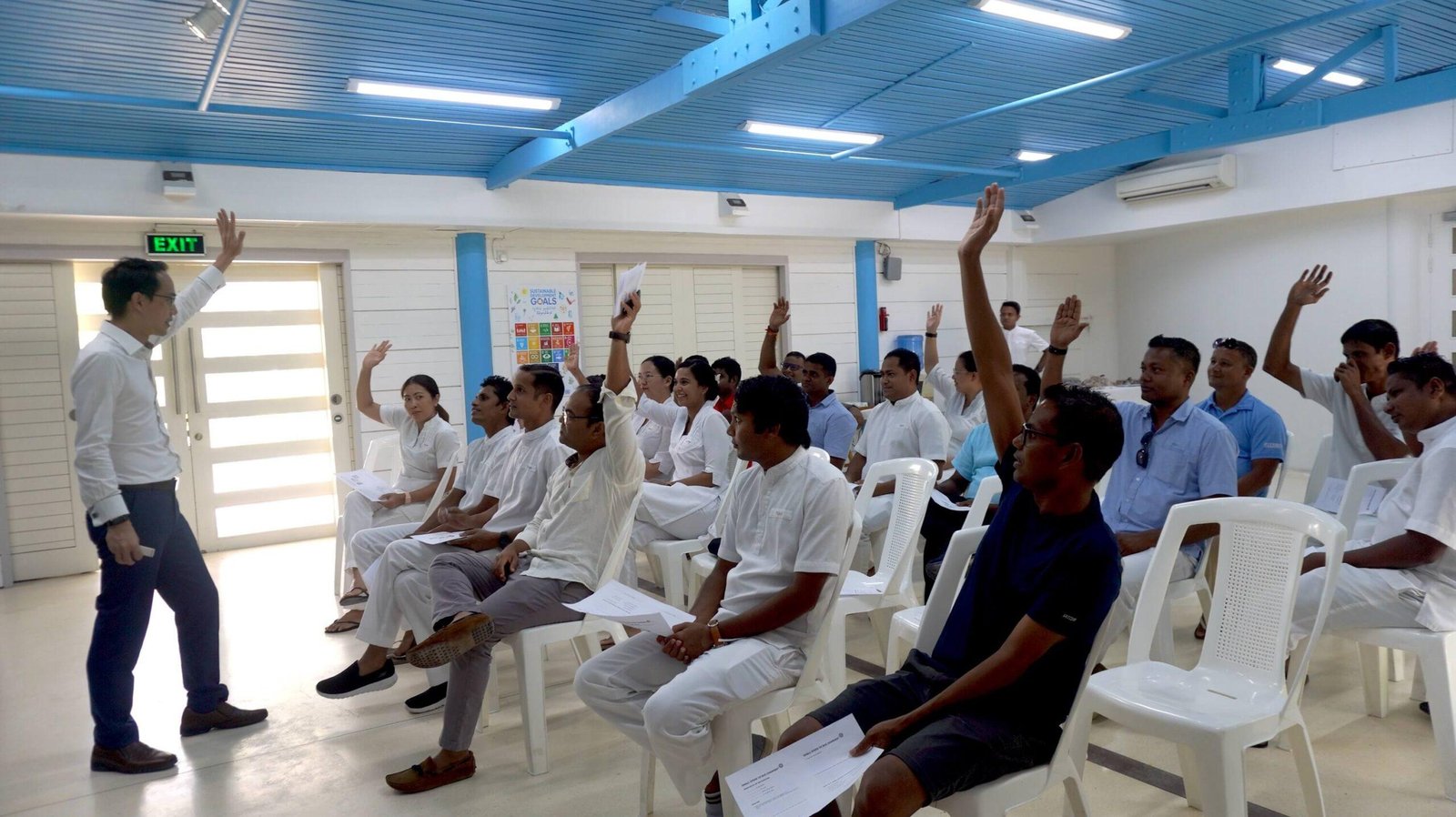
Deep Impact is a Singapore-based leadership training consultancy founded in 2007. We've impacted over 43,000+ professionals across 285+ clients in 40+ countries - from C-suite executives to first-time managers.
Every program is customised to your organisation's challenges, culture, and goals. We don't do off-the-shelf - that's why the results stick.
Frequently Asked
Corporate Coaching - Common Questions
Answers to the questions we most often hear from HR, L&D, and senior leadership sponsors evaluating coaching for their leaders in Singapore.
Ask Us Directly arrow_forwardStart With A Conversation
Explore the Fit - No Commitment, Just a Conversation.
Tell us about the leader, the situation, and the outcome you need. We will help you determine whether Solution-Focused Executive Coaching, Marshall Goldsmith Stakeholder Centered Coaching, Team Coaching, or a blended coaching design is the right next step.
Typically Responds Within 1 Business Day