Are Facilitation in Workshops Worth for Organisation?

Janelle Kwok
Leadership Training Consultant
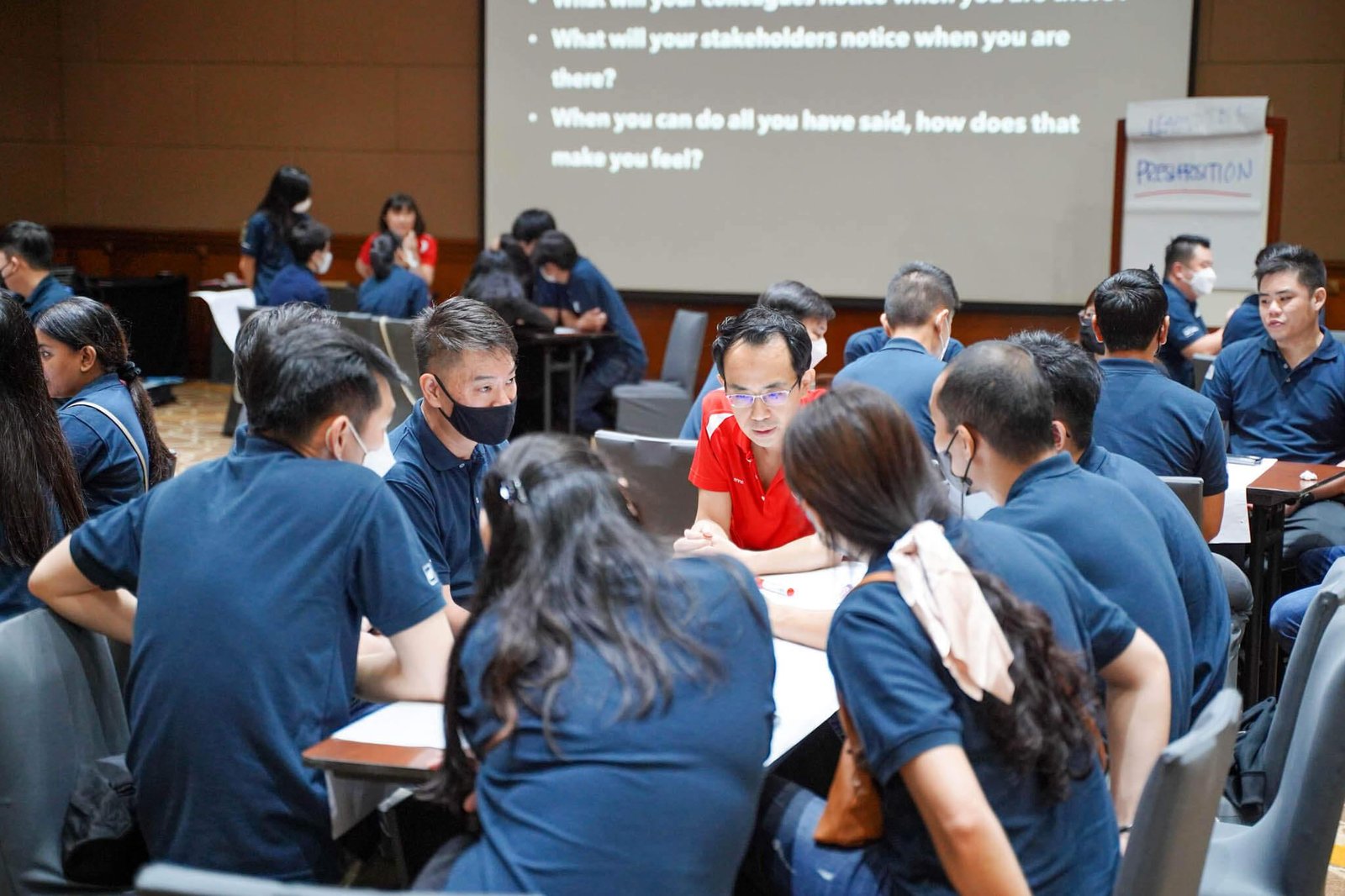
Leadership teams spend countless hours in meetings, strategy sessions, and offsites. Yet many walk away with pages of notes, a few good ideas, and little meaningful change. The challenge is rarely a lack of intelligence or effort. More often, it’s the quality of the conversations happening in the room.
Facilitation in workshops is designed to change that. Rather than simply guiding an agenda, a well-run workshop creates the structure, psychological safety, and productive dialogue leadership teams need to tackle complex challenges, align on priorities, and make the calls they can actually execute.
The real question isn’t whether facilitation in workshops is worth the investment. It’s whether your leadership team can afford to keep having conversations that don’t lead to better outcomes, stronger alignment, or measurable results.
Key Takeaways:
- Facilitation workshops improve decision-making by creating space for diverse perspectives, constructive challenge, and alignment.
- The value of facilitation is measured by outcomes after the workshop, not just participation during the session.
- Facilitation is most effective for complex decisions that require collaboration, shared ownership, and coordinated action.
- Better conversations lead to clearer decisions, stronger alignment, and more effective execution.
What Facilitation in Workshops Actually Does

It’s for decisions, not information transfer
A facilitated workshop is not a lecture, a corporate training , or a generic course. It is a structured group process for work that must be done together. The point is not that participants feel energised. The point is that the team leaves with clarity.
That distinction matters. A seminar transfers knowledge. Facilitation helps a group examine competing views, test evidence, and decide what happens next. According to SessionLab’s facilitation library (n.d.), methods are chosen by purpose, from idea generation to action planning. Buyers should apply the same discipline: start with the business need, not the activity menu.
This is where process facilitation earns its keep. A skilled process facilitator isn’t there to supply the answer, but to hold the structure so the group can reach one together a distinction that separates genuine facilitation from a dressed-up briefing.
The outputs leadership teams should expect
A good session should produce tangible outputs, not just good energy. At leadership level, that usually means:
- a clearly framed problem
- agreed criteria
- prioritised options
- documented choices
- named owners
- deadlines
- openly recorded risks and unresolved issues
- a review date
Judge the session by the work completed
Positive feedback is useful, but it is not proof of value. A successful workshop is one where each participant is able to state what changed, what they must do, and who is accountable. Before the session, note what is unresolved. After it, test what is now clear. That before-and-after comparison is far more useful than a smile sheet.
The Business Case for Facilitation in Workshops
Compare the cost with the cost of delay
The wrong comparison is the workshop fee versus doing nothing. The better comparison is the investment in facilitation against the cost of delayed decisions, misalignment, and unresolved issues.
For example, if ten senior leaders spend four hours together, that represents forty executive hours before considering preparation, facilitator time, and supporting costs. The real question is whether the workshop helps the organisation reach clarity faster, avoid costly mistakes, and move forward with greater alignment.
Count execution friction and avoided meetings
Alignment has financial value because unclear choices create rework. One function hears one priority, another hears something else, and the sponsor spends the next fortnight translating the meeting back into plain English. Most organisations also have a meeting to discuss why the previous meeting achieved nothing. We have seen this more than once.
Useful facilitation reduces that follow-up traffic. According to Atlassian’s Team Playbook (n.d.), structured plays are used repeatedly for priorities, roles, and working agreements because collaborative work needs process support when operational consequences are real.
Apply a minimum value threshold before funding
Set the threshold in advance. For example, the session may need to remove two rounds of rework, shorten three senior meetings, or accelerate a key call by two weeks. If it cannot plausibly do that, it is not a sound investment.
When Facilitation in Workshops Is Worth the Investment
Use it for cross-functional decisions
Facilitated workshops are most valuable when the answer cannot be created by one person or one function alone. Strategic planning, organisational change, service redesign, and resource allocation often require different perspectives to be considered before a decision can be made.
While a sponsor may have the authority to decide, the knowledge required to make that decision often sits across the organisation. Facilitation helps bring those perspectives together, challenge assumptions, and build shared ownership around the outcome.
Use it when history, hierarchy, or geography affect the conversation
Some challenges are not caused by a lack of capability. They emerge because teams interpret situations differently, communicate through different leadership styles, or continue revisiting the same discussions without resolution.
Apply the three-condition test
Workshop facilitation is usually worth considering when three conditions exist:
- The issue has significant impact and requires careful consideration.
- The solution depends on multiple perspectives rather than one expert opinion.
- Successful implementation requires shared ownership across stakeholders.
When these conditions are not present, a simpler approach such as a focused meeting, consultation, or direct decision may be more effective.
When It Isn’t Worth It
Don’t facilitate a call that has already been made
If the conclusion is fixed, do not invite a group into fake consultation. Use a briefing or implementation meeting instead. People can accept a firm call more easily than they accept theatre pretending to be participation.
Don’t use it for simple information transfer
If the objective is to explain a policy, present results, or issue instructions, a shorter meeting, a written note, or a focused training session will usually do the job better. A structured session is not a premium format for information people could have read before lunch.
A facilitator cannot replace executive accountability
The role a facilitator plays is to improve the process, not to own the outcome. The sponsor must still define the boundaries, make the final call where it’s needed, and carry the consequences. Without that discipline, even a good facilitator and a good design will produce ambiguity.
Use a quick approval checklist
- Is the objective specific?
- Do the real decision makers need to be in the room?
- Do participants have influence over the outcome?
- Is there authority, budget, and willingness to act afterwards?
- Could this be resolved in a 20-minute conversation instead?
How to Measure the Return from Facilitation in Workshops
The success of a facilitation workshop should not be measured only by whether participants enjoyed the session or whether the agenda was completed. A well-designed facilitation creates value through what happens after the events ends.
Measure decision quality, not just participation
A productive workshop should help leaders make clearer decisions. Look for evidence that the group has moved from discussion to alignment: priorities are clearer, trade-offs are understood, risks are acknowledged, and decisions have defined owners.
Track what changes after the workshop
The strongest indicators of impact appear in the weeks and months that follow. Are teams spending less time revisiting the same issues? Are decisions moving faster? Are stakeholders clearer about responsibilities and next steps?
A workshop creates value when it reduces confusion and helps people act with greater confidence.
Assess alignment and ownership
One of the biggest benefits of facilitation is creating shared understanding among people who may have different priorities or perspectives. Success can be measured by whether stakeholders leave with a common direction and a stronger sense of ownership.
Consider the cost of unresolved issues
The value of facilitation becomes clearer when compared with the cost of continued misalignment. Delayed decisions, repeated meetings, unclear accountability, and cross-functional friction all consume organisational resources.
The goal is not to run more workshops. It is to use facilitation when better conversations can lead to better outcomes.
If you are building internal capability, measure meeting performance
Some organisations also invest in facilitation training to build facilitation skill internally, developing that professional practice and experience across a broader group of leaders rather than relying solely on an external designer of the programme.
In that case, do not judge the programme only by learning feedback, certificate completion, or whether someone enjoyed the course. Measure whether leaders can facilitate group discussions more cleanly afterwards, whether actions are completed faster, and whether the organisation needs less external support.
The same caution applies to any facilitator course, online course, or certification pathway. A certificate is not proof that someone can guide a group discussion under pressure, read the room, or build facilitation skill in a politically sensitive environment.
How to Choose the Right Approach to Workshop Facilitation

Start with the business problem, not the format
Ask providers how the design connects to the business problem. Be cautious of anyone who offers a standard course, design thinking exercise, or tool technique before diagnosing the issue. A good facilitator, and a good designer of the process itself, starts with context.
Assess preparation and adaptation
A credible provider should ask about stakeholder history, decision boundaries, participant dynamics, and required outputs. Then ask how they adapt if evidence is incomplete, if one person dominates, or if silence signals disagreement rather than consent whether the session runs in person or as a remote event.
Match the format to the need
- Decision-focused session: resolves a defined strategic question
- Alignment-focused session: creates shared interpretation and commitment
- Capability-building session: builds leaders’ ability to facilitate future discussions
Confusion begins when the sponsor buys one programme and expects the outcome of another.
Facilitation in Workshops Is Worth It When the Decision Matters
As a leader, the question is not whether every challenge needs a facilitated workshop. The better question is whether the decision is important enough to deserve a process that brings the right people together, encourages honest discussion, and creates alignment before action begins.
Facilitation adds value when a decision requires different perspectives, thoughtful challenge, and commitment from the people who will carry it forward. It is less useful when the goal is only to share information, validate a decision that has already been made, or give people the impression that their input matters.
The real value of facilitation is not what happens during the workshop itself. It is what happens afterwards. A well-facilitated conversation helps leaders see blind spots, question assumptions, build shared understanding, and move forward with greater clarity and confidence.
For complex decisions, the challenge is rarely a lack of ideas. The challenge is creating the space for the right conversations to happen and ensuring people feel ownership over the way forward.
A skilled facilitator does not make the decision for the team. They help leaders create the conditions where better decisions can emerge and where people are more committed to making them work.
When the decision carries significant impact, the quality of the conversation behind it matters. Deep Impact helps leadership teams facilitate meaningful discussions, build alignment, and turn challenges into clear actions. Connect with us to create conversations that lead to better decisions and stronger outcomes.
Frequently Asked Questions
Is facilitation in workshops the same as leadership training?
No. Leadership training focuses on developing individual knowledge, skills, and behaviours, while a facilitated workshop helps groups solve problems, make decisions, align on priorities, or navigate complex conversations. Some programmes combine both approaches, but organisations should first clarify whether they need capability building, alignment, or a specific business outcome.
When should a leadership team consider bringing in workshop facilitation?
It’s valuable when a team needs to address challenges that cannot be solved through routine meetings or individual discussions. This may include aligning on strategy, resolving competing priorities, improving collaboration, making critical decisions, or creating shared ownership across stakeholders.
Can facilitation in workshops solve organisational problems on its own?
No. It creates the conditions for better thinking, decision-making, and alignment, but lasting change requires leadership commitment and follow-through. A workshop can reveal issues and create a path forward, but implementation depends on the organisation’s willingness to act.
Read more: How Singapore Teams Can Get Better Results with Less Effort