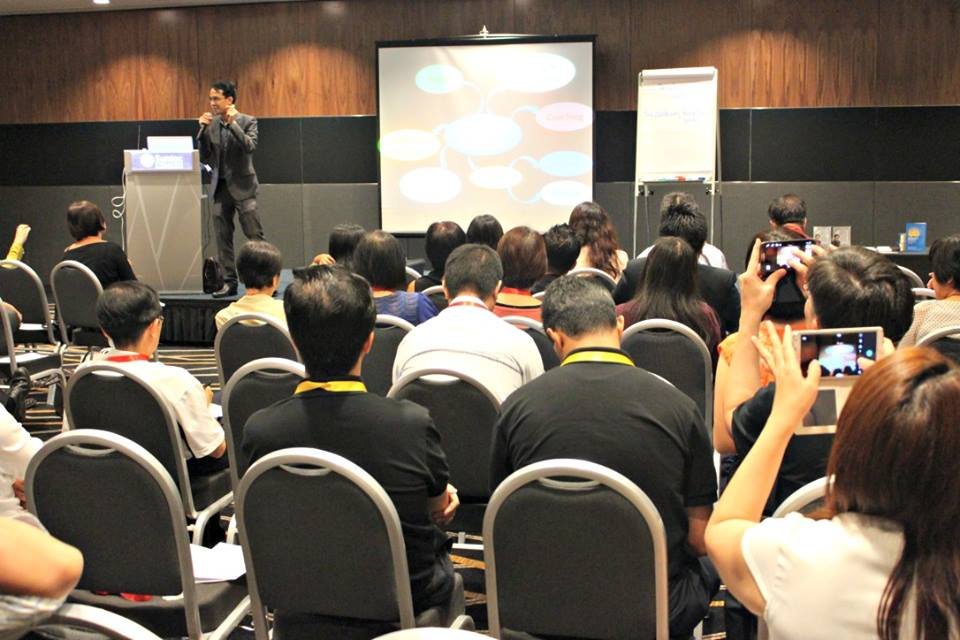
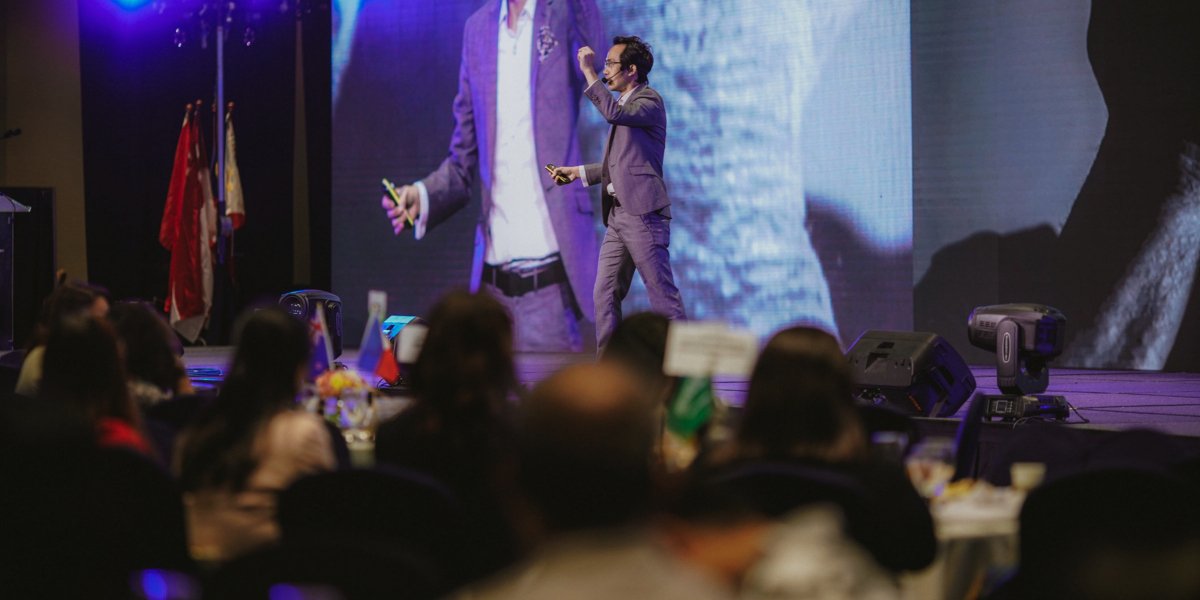
Picking the Wrong Event Speaker Can Kill Your Event


Janelle Kwok
Leadership Training Consultant
An event lives or dies on its speaker. The venue can be flawless, the catering excellent, and the agenda perfectly timed but if the person on stage fails to connect, none of it matters. Attendees remember how a session made them feel, and a mismatched speaker can undo months of planning in a single hour.
For event organisers in Singapore’s fast-moving corporate calendar, the stakes of this decision are rising. Conferences, leadership offsites, and company town halls are increasingly judged not just on attendance numbers but on whether they actually change how people think and work afterwards. That outcome rests heavily on one choice: who gets the microphone.
Key Takeaways:
- A strong speaker choice is about fit, not fame.
- The best choice is the one that serves one clear event outcome for one specific audience.
- Before booking, ask what this audience should do differently after the session.
- Better selection improves engagement, message retention, and confidence in the event as a whole.
- Even the right speaker cannot fix a weak strategy or poor follow-through alone.
Why the Wrong Speaker Is a Business Risk, Not Just a Bad Session

Hiring an event speaker is often treated as a logistics task book a name, confirm the fee, fill the slot. In reality, it is a strategic decision with consequences that extend well beyond the room.
A keynote speaker sets the tone for an entire conference. Get it right, and the audience arrives energised for every session that follows. Get it wrong, and organisers spend the rest of the day fighting to recover attention and credibility. A flat or irrelevant keynote speech can leave attendees disengaged, sceptical of future events, and less likely to act on whatever leadership message the event was meant to deliver.
This matters more than many organisers assume. McKinsey’s research on workplace purpose found that employees at purpose-driven companies are roughly four times more engaged at work than their peers elsewhere. A corporate event, at its best, is one of the few moments a company can directly reinforce that sense of purpose to its people. A speaker who cannot connect the session’s theme to something the audience genuinely cares about wastes that opportunity and can leave employees more disengaged than before they walked in.
The five warning signs you are about to book the wrong speaker
By the time mismatch is obvious on stage, the budget is spent and the audience has already felt it. The better move is to catch the warning signs while you still have options.
Sign #1. For event planners, a generic presentation is a major red flag
If a speaker delivers the same presentation everywhere, relevance becomes accidental. Ask what will be customised for your event: which examples will change, how the event theme will appear, and what the audience should think or do differently when the session ends. If the answer stays vague, assume the content will too.
Sign #2. For marketing leaders, impressive credentials are not enough
A polished biography can create false confidence. Board roles, media mentions, an award, or a senior title may prove credibility in one lane, but they do not prove subject fit. What matters is relevant experience: can the speaker handle your topic with depth, speak at the right level, and show work with comparable teams?
A professional speaker with the wrong expertise is still the wrong choice.
Sign #3. For conference organisers, a highlight reel of motivational keynote can hide delivery problems
A two-minute reel is marketing, not proof. It can make any motivational speaker look effortless. Ask for a full-session recording of a keynote speech or workshop speech, then watch the middle, not just the applause line. Pacing, transitions, interaction, and clarity of insight tell you far more than the edit.
Sign #4. For HR leaders, a speaker who doesn’t ask questions before the event is a warning sign
The best speakers rarely begin with slides. They begin with questions. They want to understand your audience, business challenges, event objectives, and the outcome you’re hoping to achieve. If a speaker never asks about your organisation and simply requests the event date and speaking time, they’re probably planning to deliver the same presentation they give everywhere else. Curiosity before the event is often a good indicator of relevance during the event.
Sign #5. For procurement teams, choosing on price alone can become the most expensive decision
Every event has a budget, but the lowest fee doesn’t always represent the best value. A keynote speaker has a disproportionate influence on how attendees remember an event. Saving money on the speaker only to lose audience engagement, damage the event’s reputation, or miss the opportunity to inspire meaningful action can cost far more than the difference in speaking fees. Instead of asking, “Who’s the cheapest?” ask, “Who’s the best fit for this audience and objective?”
What a Strong Professional Speakers Actually Share and Deliver
The right professional speaker does more than fill time on the agenda. A well-matched keynote:
- Sets the tone early, giving the audience a reason to stay engaged for the rest of the conference
- Connects specific, relevant insight to the event’s theme rather than a generic motivational talk
- Adapts delivery and examples to the audience’s industry, seniority, and challenges
- Leaves attendees with a concrete idea, mindset shift, or story they can apply back at work
- Reflects well on the organiser and the company hosting the event
This is the difference between a speaker who merely occupies a session and one who shapes how an entire event is remembered.
How to Choose the Right Speaker for Your Event in Singapore
1. Start with the event’s purpose, not the speaker’s profile.
Before browsing speaker bureau listings, define what the audience should think, feel, or do differently after the session. Every other decision should be tested against this.
2. Match expertise to the specific theme.
A speaker with deep experience in leadership development is not automatically the right fit for a session on innovation or resilience. Ask how the proposed keynote speech specifically addresses your event’s theme, not just their general area of expertise.
3. Assess delivery style against your audience.
Corporate audiences in Asia often respond differently to a speaker’s tone and pacing than audiences elsewhere. A speaker experienced with professional speakers Singapore audiences will understand local business culture, communication norms, and what genuinely resonates in the room.
4. Request for highlights and references.
A three minute highlight reel tells you little about how a speaker handles a ninety minute session, difficult questions, or a distracted post lunch crowd or inspire audience. Ask for full recordings and speak to past organisers directly.
5. Confirm customisation, not a recycled deck.
The strongest speakers adjust their content, case studies, and language for each specific event and audience rather than delivering an identical talk everywhere.
6. Work with a reputable speakers when in doubt.
An established speakers bureau in Asia can help vet credentials, confirm availability, reducing the risk of last minute surprises.
The Cost of Getting It Wrong
Beyond a single disappointing session, a poorly chosen speaker can affect an organiser’s credibility with leadership, dampen enthusiasm for future events, and leave a company’s own message about culture, leadership, or strategy undermined by a delivery that fails to land. In a corporate environment where budgets for in-person events are under greater scrutiny, that is a risk few organisers can afford to take lightly.
“An event speaker isn’t there to fill an agenda slot, they’re there to shift how a room thinks. Choose for fit and relevance, not just for a recognisable name.”
-Kenneth Kwan, CSP
How to reduce the risk of choosing the wrong event speaker
No selection process removes all uncertainty. It can, however, reduce avoidable risk and give decision makers confidence that the final choice was made for the right reasons. The strongest organisations treat speaker selection as a structured business decision rather than a last minute booking.
Use a consistent evaluation
Comparing speakers becomes much easier when every candidate is assessed against the same criteria. A simple weighted scorecard helps remove personal bias and makes the final recommendation easier to justify.
Consider evaluating each speaker on:
- Audience fit
- Alignment with the event objective
- Subject expertise
- Willingness to customise
- Delivery quality
- Credibility
- Professionalism and reliability
- Logistics and responsiveness
- Budget
Not every criterion deserves equal weight. If the objective is to shift thinking, strengthen leadership, or encourage behaviour change, audience fit and customisation should carry more weight than visibility or popularity.
Evaluate value, not just speaking fees
The lowest fee is not always the lowest cost. A keynote that fails to engage the audience or reinforce the event’s purpose can reduce the impact of the entire programme.
A better question is not, “Which speaker is the least expensive?” It’s, “Which speaker gives this audience the best chance of achieving the event’s objective?” Cost matters, but value is measured by the contribution a speaker makes to the success of the event.
Build collaboration into the planning process
The strongest keynote sessions are rarely created in isolation. They are the result of collaboration between the organisation and the speaker before anyone steps onto the stage.
A good preparation process typically includes:
- A briefing call to discuss business objectives
- A clear audience profile
- Agreement on the session outcome
- Expectations for customisation
- Technical and venue checks
- Programme timing and coordination
- A contingency plan for unexpected changes
Experienced speakers expect this level of preparation because they understand that successful events depend as much on planning as they do on presentation.
The Right Speaker Creates More Than a Good Event
Every event is an investment of time, money, and attention. The speaker you choose has a significant influence on whether that investment creates lasting value or becomes another event people quickly forget.
The best keynote speakers are not necessarily the most famous or the most entertaining. They are the ones who understand your audience, align with your objectives, and deliver ideas people can apply long after they leave the room. That’s what turns a keynote into something more than a presentation. It becomes a catalyst for better conversations, stronger alignment, and meaningful action.
Before making your final decision, ask one simple question: What do we want people to do differently after this session?
Connect with Deep Impact
Planning a conference, leadership offsite, or corporate event? If you’re looking for a keynote that is tailored to your audience, aligned with your business objectives, and designed to create lasting impact, connect with Deep Impact to deliver practical, thought provoking keynote sessions that go beyond inspiration and help turn ideas into action.
Frequently Asked Questions
How far in advance should I book an event speaker?
For a keynote speaker with heavy demand, several months is common, and major conference schedules may need longer. More important than the calendar is leaving enough time for briefing, customisation, and technical planning. A rushed booking increases the chance that you hire availability instead of fit.
Should I ask for full-session video before hiring an event speaker?
Yes. A full-session recording gives you a far more reliable view than a highlight reel. Watch pacing, clarity, audience interaction, transitions, and how the speaker handles unscripted moments. Those details usually decide whether a keynote speech works in a live room.
What matters more: speaker reputation or audience fit?
Audience fit matters more. Reputation can be useful shorthand for credibility, but it does not guarantee relevance to your audience, topic, or business objective. If a lesser-known professional speaker understands the room, supports the event message, and adapts with confidence, they are often the stronger choice.
Read more: 12 Reasons Your Organisation Should Hire a Certified Speaking Professional for Leadership Events