 Book Free Consultation


Organisations across Singapore face a common challenge: developing future leaders who can manage the demands of today while building the skills needed to drive tomorrow’s growth. Without structured leadership development pathways, many leaders are left to learn through trial and error sometimes at significant cost to both people and business.
A custom leadership program offers a tailored solution to this challenge. These leadership programs go beyond theory, focusing on practical, hands on strategies that can be immediately applied to real business situations from improving team collaboration and boosting employee engagement to navigating organisational change and driving innovation.
Singapore’s dynamic business ecosystem shapes every aspect of these programmes. Local market insights, regulatory considerations, and cultural nuances ensure that leadership development remains relevant, actionable, and measurable. Participants leave equipped not only with new skills, but with a concrete plan to elevate leadership, strengthen their teams, and accelerate business outcomes.
Investing in a tailored leadership program is more than a professional development opportunity; it is a strategic move that creates lasting impact, strengthens organisational culture, and positions the business for long term success.
What Is a Custom Leadership Program?
Unlike standard executive education, a custom leadership program functions as a strategic intervention. It begins with a simple but profound question: What needs to happen here that isn’t happening now?
Leading experts and research from the National University of Singapore (2024) found that leadership development programs contextualised to the organisation’s context and local market show significantly higher retention of leadership skills and new behaviors among participants.
When working with senior leaders, the focus is on the organisation’s specific strategic goals — whether supporting women leaders navigating a male dominated industry or preparing new leaders stepping up through a period of merger and change. The learning experience is designed around their reality, not a generic curriculum. It is not about learning for the sake of knowledge; it is about learning for the sake of execution.
Executive coaching plays a central role at this stage, helping senior executives and the broader executive team gain clarity on both corporate strategy and the leadership behaviors required to deliver it.
Why Off the Shelf Leadership Programs Fail to Drive Transformation
Most leadership training fails because it ignores the “forgetting curve.” Participants attend a two day workshop, feel inspired, and then return to the whirlwind of emails, client demands, and operational pressures that quickly erode new behaviours. Without structured follow-up, the energy generated by a generic programme dissipates before meaningful organisational change can take hold.
Generic learning programs also rely heavily on concepts and case studies drawn from various industries that feel disconnected from participants’ real world challenges. A Silicon Valley startup example may not resonate with a family-owned manufacturing firm in Jurong or a fast growing tech company in Singapore’s Central Business District. Without the critical moment of relevance where a leader thinks, “This applies directly to my business” — true transformation remains out of reach.
Leadership programs are most effective when integrated into corporate strategy, with senior leadership actively providing support and direction, and learning objectives clearly aligned to the organisation’s priorities.
The Missing Context in Leadership Development
A significant gap in many programmes lies in cultural and operational context. Western leadership models often assume a level of directness and organisational scale that can backfire in Asian business settings, where relationships, hierarchy, and nuanced influence are essential.
Effective leaders in Singapore frequently require what might be called multi partiality, the ability to respect hierarchy while simultaneously fostering innovation and agility at every one of the leadership levels within the organisation. Off the shelf leadership programs rarely address gaps of this nature, leaving leaders from first level leaders through to the C suite without the tools needed to navigate their unique environment.
The business case for getting this right is compelling. Customised programmes can improve leadership effectiveness by up to 30%, with organisations reporting better communication, stronger collaboration, and greater financial returns when leadership development is prioritised. A focused approach to development can also prepare internal candidates for future leadership roles, reducing vacancy backfill time by nearly half, a meaningful competitive advantage in a tight talent market.
The Architecture of a Custom Leadership Program
Custom leadership programs are most effective when built on a structured framework rather than assembled through guesswork. A well designed focused approach ensures leadership gaps are addressed precisely, delivering measurable impact on both people and business outcomes.
Research suggests that as many as 20% of organisations lack the leaders needed to deliver on their strategic goals. Structured leadership development programs help build the talent pipeline required to close that gap, creating multiple pathways for leaders at different leadership levels — from individual contributors and team leaders through to mid level leaders, senior executives, and the C suite.
Organisational Diagnostic: Data driven insights are used to understand the current state of the organisation — evaluating leadership skills, team dynamics, and operational challenges specific to your context. Grounding the program in real data ensures focus on the areas that will drive the most immediate and meaningful improvement in business outcomes.
Strategic Capability Mapping: The program identifies the leadership behaviours that will most directly support the organisation’s corporate strategy and growth objectives. Mapping capabilities to strategic goals ensures that development efforts are practical, relevant, and aligned with business priorities across all leadership levels — including mid level managers, new leaders, and level leaders stepping into expanded responsibilities.
Reinforcement Systems: Mechanisms are built in to embed and sustain new behaviours over time. These may include executive coaching, peer learning, and follow up sessions. In person experiences are combined with opportunities to progress at each participant’s own pace, ensuring learning objectives are met without disrupting day to day operations.
At Deep Impact, our customised programmes leverage a proven 5D framework to structure learning and application. Moving through these phases helps both senior leaders and individual contributors gain insight into how their development connects to the bigger picture, enabling organisations to strengthen leadership at every level and drive meaningful, long term business outcomes.
Leadership Challenges Facing Singapore’s Organisations
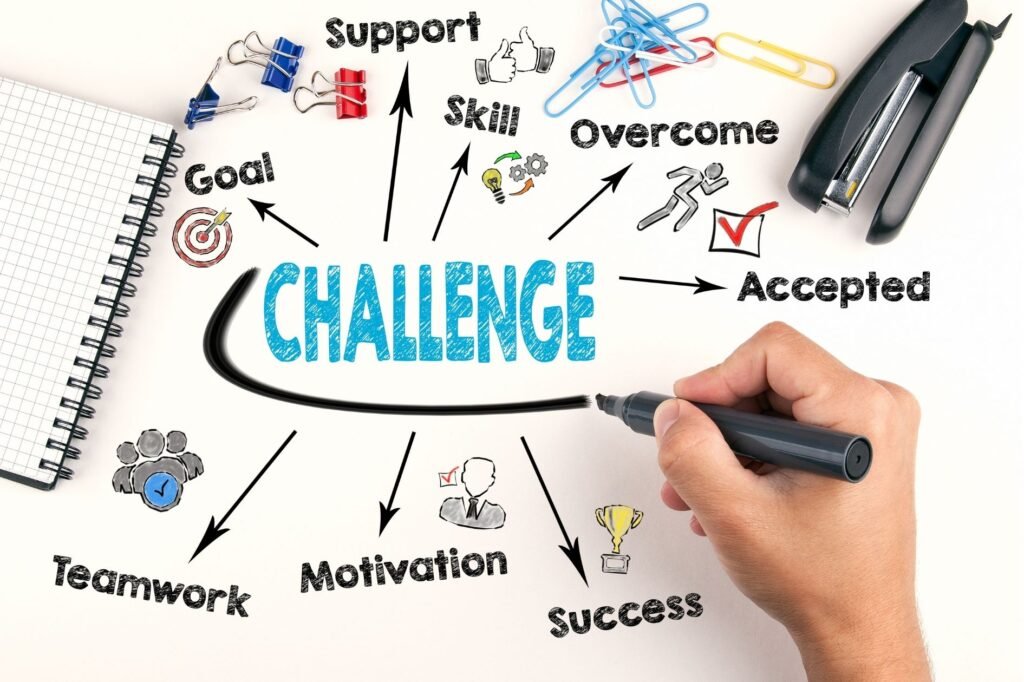
Singapore organisations are operating in an environment shaped by transformation, talent pressure, and regional expansion. EDB’s 2025 business insights and year-in-review materials highlight the importance of innovation, AI adoption, workforce transformation, and Singapore’s role as a strategic base for growth across Southeast Asia. For many companies, leadership capability is now a business priority, not just an HR initiative.
At the same time, many mid-level and senior leaders are being asked to do more than ever. They are expected to drive performance, lead change, manage hybrid teams, support employee wellbeing, and translate strategy into execution. In Singapore, commentary drawing on Gallup and HR data has pointed to manager disengagement and the growing strain placed on people managers as they juggle competing expectations.
Leaders need the judgment to adopt new technologies, the confidence to lead through uncertainty, and the interpersonal skills to maintain trust, alignment, and accountability across teams. These are not capabilities that are built effectively through generic, off-the-shelf learning alone.
For organisations expanding into ASEAN markets, the challenge is even greater. Leaders must navigate cross-cultural dynamics, local market realities, and differing regulatory environments while keeping teams aligned to a shared strategy.
This is where a custom leadership program becomes especially valuable: it allows leadership development to be shaped around the organisation’s business goals, growth context, leadership levels, and operating realities.
Organisations that invest in this kind of leadership capability are better placed to build resilient teams, sustain performance, and turn complexity into opportunity.
The ROI of Investing in a Custom Leadership Program
Is a custom leadership program worth the investment? The more relevant question is: what is the cost of not investing?
The cost of ineffective leadership training programs — lost productivity, disengaged teams, high turnover, and missed opportunities, consistently outweighs the upfront investment of a well designed programme. Organisations that prioritise continuous learning build the agility needed to respond to rapid market disruptions and maintain a genuine competitive advantage. Those that don’t risk stagnation.
According to McKinsey & Company, organisations that align leadership training with corporate strategy are significantly more likely to outperform peers in both productivity and organisational health, a clear indicator that professional development is not a cost centre but a driver of long term success.
Off-the-Shelf Program vs Custom Leadership Program
| Feature | Off-the-Shelf Leadership Program | Custom Leadership Program |
|---|---|---|
| Relevance to Business | Standard case studies from various industries | Tailored to the organisation’s context, size, and strategic goals |
| Application of Learning | Participants may struggle to apply concepts | Actionable strategies implemented immediately |
| Cultural Context | Assumes Western business practices | Designed for Singapore’s cultural and operational nuances |
| Sustainability of Change | Short term inspiration; limited follow up | Reinforcement systems ensure new behaviors last |
| Impact on Team Performance | Limited measurable improvement | Directly improves team collaboration, engagement, and retention |
| Cost Efficiency | Low initial cost; high hidden cost from lost productivity | Higher upfront investment; measurable ROI through sustained business outcomes |
| Digital Transformation Support | Limited focus on emerging technologies | Builds skills needed to lead hybrid teams and integrate AI |
| Regional Expansion Readiness | Rarely addresses cross cultural challenges | Equips leaders to manage diverse teams across ASEAN markets |
Case Study: Co-Creating a Custom Leadership Programme with the Civil Service College (Singapore)
When the Civil Service College approached us, they had a clear ambition: to equip leaders in service management roles with the mindset and tools to drive meaningful change — not through sweeping overhauls, but through deliberate, incremental steps. Their guiding philosophy was simple yet powerful — small steps lead to big changes.
Our Approach: Listening First
We began with deep listening. Before designing a single module, we spent time understanding the College’s strategic objectives, the realities their leaders faced on the ground, and what success would genuinely look like for their people. This co-creation process ensured the programme was built with them, not just for them.
Contextualising for the Civil Service
Rather than delivering an off-the-shelf leadership curriculum, we tailored every element to the context of public service delivery — where the measure of excellence is the quality of citizen experiences. Case examples, scenarios, and discussions were all anchored in the realities of serving the public, making the learning immediately relevant and applicable.
The DEEP Model at the Centre
The heart of the programme was the DEEP Model, a structured reflective framework that guided leaders through four essential lenses:
- D — Design Preferred Future: Leaders were invited to articulate a vivid, aspirational picture of what outstanding service management could look like in their teams and agencies.
- E — Explore Current Position: We examined where they are in their service delivery and also how understanding that they already have inherent strengths in citizen engagement, use of technology and data analytics.
- E — Examining What Worked Well: Drawing on an appreciative, strengths-based perspective, participants identified existing practices and behaviours that were already producing positive outcomes — building confidence and momentum.
- P — Plan Small Steps: Participants left each session with concrete micro-commitments — tangible actions they could implement immediately to begin shifting culture and service quality from the inside out.
The Outcome
The programme succeeded in shifting how leaders thought about change — from feeling overwhelmed by the scale of service transformation to feeling empowered by the progress they could make today. By grounding leadership development in the Civil Service’s own context and language, and giving leaders a repeatable model like DEEP to return to, we helped build a sustainable culture of continuous improvement in service excellence.
This programme is a testament to what becomes possible when learning design starts with genuine partnership, contextual relevance, and a belief that every big change begins with one small, intentional step.
How to Evaluate a Custom Leadership Program Provider
Choosing the right leadership development partner is a strategic decision, not simply a procurement exercise. The provider should bring genuine real world experience and a strong track record of working with organisations navigating complex leadership challenges across different leadership levels — from team leaders and managers to senior executives and the C suite.
Research from the Harvard Business Review highlights that up to 75% of leadership training fails to deliver sustained leadership behaviors change, largely due to a lack of contextualisation and follow through. For organisations where resources and leadership bandwidth are finite, this risk is particularly costly.
Look for providers who:
- Build programmes on a research based, structured yet flexible framework adaptable to your industry, size, culture, and strategic goals
- Commit to measurable business outcomes, not just participant satisfaction scores
- Co create the curriculum collaboratively to address gaps in capability, ensuring relevance to specific challenges and long term growth ambitions
- Offer reinforcement mechanisms — executive coaching, peer learning, and follow up beyond the initial learning experience
- Demonstrate experience supporting leaders across multiple pathways and leadership levels, including first level leaders, mid level leaders, and senior leadership
A focused approach delivers far greater impact than a broad, generic programme. The right partner thinks in terms of transformation, not transactions and supports organisations in building strategic partnerships between learning and business performance.
How Effective Leadership Programs Are Designed
Professional development in leadership should be engaging, practical, and directly tied to business outcomes. Leading experts in leadership development emphasise that programmes must be designed with clear learning objectives relevant to the organisation’s context to deliver measurable impact across all leadership levels.
In every organisation, each leader plays a critical role. A successful leader at any level whether a team leader, a mid level manager, or a member of the executive team directly influences team performance, employee engagement, and overall business growth.
Effective design elements include:
- Experiential exercises — including physical scaling activities where participants move through real world scenarios to anchor learning in context and build confidence in applying leadership skills
- Simulation exercises — replicating high pressure decision making situations, allowing leaders to practise prioritising resources, managing team dynamics, or resolving conflict in a safe environment, and gain insight into their own leadership behaviors
- Role playing scenarios — teaching leaders how to handle difficult conversations, foster collaboration, and encourage innovation. These are available both in person and in formats that allow participants to progress at their own pace
- Peer learning — creating structured opportunities for managers, individual contributors, and level leaders to learn from one another’s experiences across various industries and contexts
- Reflection and feedback mechanisms — guided group discussions and post session coaching that reinforce learning and help leaders translate concepts into new behaviors and sustainable change
The involvement of senior leaders and the broader executive team throughout the programme significantly enhances relevance and engagement. Ongoing evaluation ensures that learning objectives are met and that the programme continues to evolve alongside the organisation’s strategic goals.
The outcome is not simply stronger managers it is an organisational culture equipped to adapt, innovate, and lead in a competitive Singaporean business landscape, with leaders at every level ready to drive organisational change and deliver business outcomes.
Finding the Right Partner for Leadership Development Programs
For organisations seeking to develop future leaders, the search should be for a partner, not a vendor. The ideal partner understands your organisation’s specific challenges and co creates programmes that reflect your people, culture, and corporate strategy working across different leadership levels from new leaders and first level leaders to senior executives and C suite decision makers.
Research based methodologies, combined with a solution focused approach and small, actionable steps, help organisations improve operational efficiency, strengthen team performance, and enhance customer satisfaction. While leadership development is a journey that requires commitment, tailored customised programmes allow organisations to address gaps, build from existing strengths, cultivate resilience, and achieve sustainable success.
Deep Impact works closely alongside organisations to design leadership experiences that create real, lasting organisational change. Every organisation is different, and the right approach begins with understanding your people, your challenges, and where you want to go next.
If strengthening leadership and building a more capable, confident team of future leaders is a priority, now may be the right moment to begin.
Reach out to Deep Impact for a conversation about what your organisation truly needs and take the first step toward a custom leadership program shaped around your goals and ambitions.